
You open the app for the tenth time today. Swipe. Swipe. Match. Say hi. Nothing. Swipe. Match. Great chat for three days, then silence. Swipe again, because what else are you supposed to do?
If that loop sounds familiar, you’re not broken, and you’re not alone.
Whether you’re 26 and fresh off a situationship, or 38 and wondering why the “algorithm” still hasn’t figured out what you actually want, there’s a name for what you’re feeling: dating app burnout.
It’s real, it’s widely documented, and it’s hitting singles across every age bracket, not just Gen Z.
This isn’t a “just get off your phone and think positive” post. It’s a look at what’s actually happening, why it’s so common, and what tends to help people feel like themselves again.
What Is Dating App Burnout, Exactly?
Dating app burnout is the emotional, mental, and sometimes physical exhaustion that builds up from repeated, low-payoff swiping, messaging, and matching. It shows up as dread instead of curiosity when you open an app, cynicism about whether anyone on there is “real,” and a growing sense that the effort you’re putting in has stopped producing anything worth it.
A longitudinal study published in the journal New Media & Society followed active dating app users over 12 weeks and found that emotional exhaustion and a sense of inefficacy increased over time, and that people already dealing with depression, anxiety, or loneliness were especially likely to feel it worsen the longer they stayed on apps.
In other words, the apps aren’t just neutral tools. For a lot of people, they actively wear you down.
How Common Is Dating App Burnout, Really?
Short answer: extremely common.
A 2024 Forbes Health survey of 1,000 American dating app users found that 78% had felt emotionally, mentally, or physically exhausted by dating apps sometimes, often, or always. That’s not a fringe experience; that’s the majority.
And it’s not only a young-person problem.
The same survey found burnout rates of 79% among Millennials and Gen Z, 77% among Gen X, and 69% among Baby Boomers, meaning it stretches well past any one age group. Women reported slightly higher burnout (80%) than men (74%), which tracks with other findings about the disproportionate amount of unwanted messages, screening, and safety-related vigilance women report managing on these platforms.
The most commonly cited culprits, according to that same research, include ghosting (41% of users have experienced it), catfishing (38%), and behaviors like love bombing and gaslighting showing up on a meaningful share of profiles too. Layer on the sheer time investment (the same survey found users spend roughly 51 minutes a day on apps), and it’s easy to see how the math stops adding up.
Why Dating Apps Drain You Faster Than Meeting People In Person
Dating apps ask your brain to do something it wasn’t built for: evaluate dozens or hundreds of strangers based on a few photos and a bio, over and over, with almost no real feedback loop. Every unanswered message or unexplained match-then-vanish is a tiny, unresolved social rejection. Multiply that by weeks or months, and you get a very specific kind of fatigue that’s less “I had a bad date” and more “I don’t trust this process at all anymore.”
There’s even research on people’s actual preferences that backs this up.
A 2025 Kinsey Institute study found that fewer than 20% of men and 12% of women say they’d prefer to meet a partner through a dating app if given other options, with most people saying they’d rather meet someone through real-life events, shared activities, or their existing social circles.
People aren’t anti-dating. They’re anti-dating-app-fatigue.
Signs You Might Be Dealing With Dating App Burnout
A few common signs worth naming, since burnout can creep up gradually:
- You feel a small wave of dread, not excitement, before opening the app
- You’ve started swiping on autopilot without really reading profiles
- You assume most matches will ghost before you’ve even said hello
- You’ve caught yourself being harsher or more guarded in conversations than you’d like to be
- You’ve deleted and redownloaded the same app more than twice this year
- You’d rather stay home than go on one more “coffee that goes nowhere” date
If two or three of these sound like you, it’s time to make changes to your dating life.
What Actually Helps With Dating App Burnout
Burnout is reversible, and you don’t have to swear off dating forever to feel better.
A few things that tend to help:
Take a real break, not a guilty one. Deleting the apps for a few weeks isn’t giving up; it’s letting an overstimulated part of your brain reset. Treat it like time off, not a failure.
Get specific about what you actually want. Burnout often comes from optimizing for matches instead of connection. Getting clear on what you’re actually looking for (not what you think you should want) makes the search less exhausting.
Rebuild your “in real life” reps. If most of your dating experience lives inside a screen, of course it feels high-stakes and artificial. Practicing casual, low-pressure conversation with new people in a group setting, where there’s no swipe and no profile to perform, rebuilds the confidence and ease that apps quietly erode.
Diversify how you meet people. You don’t have to choose between “delete every app forever” and “swipe until you break.” Adding in-person options, like local meetups, classes, or singles events, gives you more than one path to connection, so no single channel has to carry all the weight.
Meeting People IRL Is the Best Cure for Dating App Burnout
This is where a lot of singles eventually land, and consider this your sign to skip the trial and error and jump straight here: the fix for app fatigue usually isn’t a better app. It’s more real, in-person moments where meeting someone doesn’t come with a profile to scroll past or a chat to keep alive with witty one-liners.
That’s exactly the gap Singles Mingle Events was built to fill.
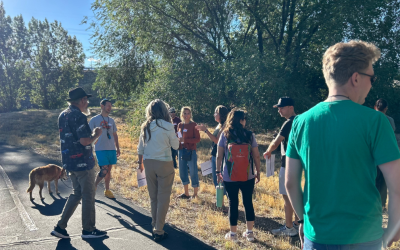
Instead of another swipe, we create actual rooms full of actual people through mixers, trivia nights, hikes, and our flagship Have We Met? Live event in Las Vegas, where the whole point is meeting someone the old-fashioned way: face-to-face, no algorithm required.
If you’re feeling the burnout, you just need a different room to walk into.