
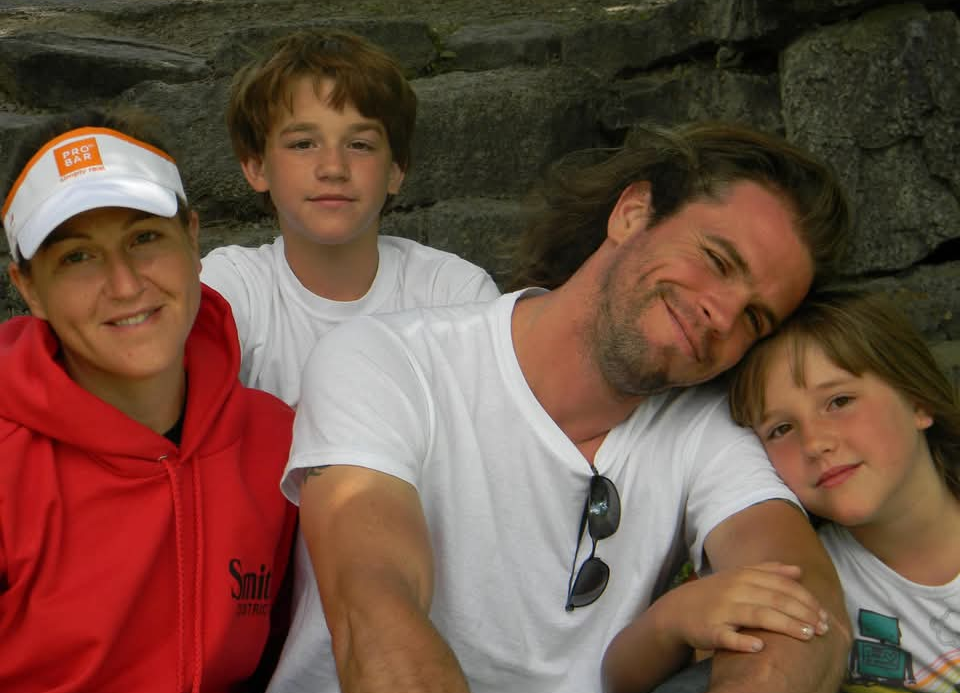
There are moments in life that create a permanent dividing line between before and after. For my family, that moment came when my husband, Derek, died by suicide in our home.
Our children were 11 and 13. We were all home.
I remember hearing the gunshots without understanding what I was hearing. I thought he was hitting something. When I went to find him, I found him on our bed. In an instant, the life our family understood was gone, and the three of us were left trying to figure out how to live inside a reality none of us had chosen.
I talk about that experience in a new episode of the podcast A New Shade of Me, released today, September 10, on World Suicide Prevention Day. The episode is called “Molly: No One Should Grieve Alone.” Telling this part of my story publicly is not easy, even after all these years. But the story I want to tell is not only about the day Derek died. It is about what happened in the months and years afterward, and about something I came to understand only with the benefit of time: sometimes the people around us cannot change what has happened, but they can make an unbearable season less lonely.
When Grief Changes the Shape of a Family
In the immediate aftermath of Derek’s death, my attention went to our children. They had lost their dad in a traumatic way, and I wanted to make sure they had space to experience whatever grief looked like for them. I couldn’t remove their pain or explain something I didn’t fully understand myself. What I could do was try to create a home where they didn’t have to hide what they were feeling or grieve according to someone else’s timetable.
They also gave me a reason to keep moving.
My own grief felt almost physical. At the time, the only way I knew how to describe it was as a black hole in my soul – a space so enormous that I couldn’t imagine anything ever filling it. There was the loss itself, but there was also the disorientation of suddenly becoming the only parent in a family that had once had two. Ordinary life continued to make demands while our lives felt anything but ordinary.
Grief is strange. The world doesn’t stop alongside you. There are still meals to make, children to raise, appointments to keep and mornings when you have to get out of bed. Eventually there are moments when you laugh and then wonder whether you’re allowed to laugh. There are good days that can make you feel guilty and difficult days that arrive without warning.
For a long time I was just trying to get my kids and myself through the chapter we were already in.
A Place Where I Didn’t Have to Be Okay
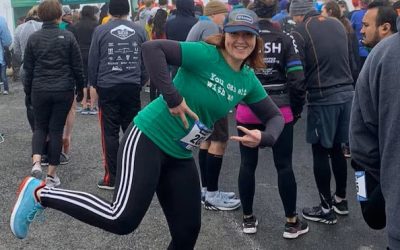
Running gave me movement when so much of my life felt stuck, and looking back, I believe it was the community surrounding running that was the magic ingredient.
There was something special about being able to show up exactly as I was.
I didn’t need to arrive cheerful. I didn’t have to reassure anyone that I was doing better. I could talk about Derek when I needed to talk about him, and I could say nothing at all when I didn’t. On some days, I needed the physical release of running. On others, I needed conversation. Sometimes I simply needed to laugh and experience an hour in which grief wasn’t the only thing occupying my mind.
My running community allowed all of those versions of me to exist.
There was no single conversation that changed everything and no dramatic moment when I realized I was going to be okay. My community kept showing up, and I kept showing up with them.
Only years later did I fully appreciate what they had given me.
We often think support requires knowing exactly what to say to someone who is hurting. My experience taught me something different. Some of the most meaningful support I received came from people who weren’t trying to fix anything. They made room for me. They invited me back. They let me participate in life at whatever level I was capable of participating that day.
That consistency became my safe space.
Community Is Built in the Showing Up
The phrase “find your people” gets used often now, as though somewhere out there is a perfectly formed community waiting for each of us to discover it. I think there is truth in the idea, but my experience has taught me that finding your people is only part of it. Community also has to be built.
It is built through repetition. You show up on Tuesday, and then you show up the next Tuesday. Eventually you learn someone’s name. A casual conversation becomes a friendship. Someone notices when you aren’t there. You begin to know whose week has been difficult and who needs encouragement. The people who were once strangers become the people you expect to see.
Belonging is rarely created in one spectacular moment. More often, it grows from dozens of ordinary ones.
That lesson has stayed with me because adult life can make this kind of consistency surprisingly difficult. We move. We change jobs. Relationships end. Children grow up. Friends enter different seasons of life. For single adults in particular, many of the social structures that once created community automatically can begin to disappear. It is entirely possible to be surrounded by people and still not feel that you belong anywhere.
The answer isn’t always to collect more acquaintances. Sometimes it is to choose a place, a group or an activity and keep returning long enough for familiarity to become connection.
The Connection I Didn’t See Until Years Later
When I began creating social events for singles, I wasn’t consciously trying to recreate what my running community had given me after Derek died. At first, I saw the two parts of my life as separate stories.
Eventually, I realized they weren’t separate at all.
The work I do now through Have You Met? Events is rooted in many of the same things that helped me all those years ago: creating a reason for people to leave the house, giving strangers something to do together and making the first conversation a little easier.
That can happen on a hike or a volleyball court. It can happen while painting, running a 5K, playing pickleball or walking along a trail. It can happen at a small gathering in Utah or, next year, among thousands of people gathering in Las Vegas for Have We Met? Live.
The activity matters, but it isn’t really the point.
The point is what the activity makes possible.
When people share an experience, conversation has somewhere to begin. When they return for another experience, recognition begins to replace unfamiliarity. Given enough opportunities to show up, relationships can form that no event organizer could ever manufacture.
I know now that creating those opportunities is deeply personal to me because I know what it feels like to need them.
The running community didn’t erase my grief. It didn’t fill the black hole I felt after Derek died or return our family to what it had been. What it did was remind me, little by little, that grief wasn’t the only thing my life could contain. There could be sorrow and friendship. There could be loss and laughter. There could be days when I missed what I had and days when I was genuinely grateful for what was still ahead.
Community didn’t ask me to choose between those things.
It gave me a place to carry them.
Why I Am Telling This Story Now
September 10 is World Suicide Prevention Day. The international observance is intended not only to raise awareness of suicide, but to change the way we talk about it—to move away from stigma and silence and toward conversations that make it easier for people to seek and offer support.
For families affected by suicide, that conversation matters too.
There can be a tendency to reduce someone’s life, and a family’s story, to the way that person died. Derek’s death changed my life and our children’s lives forever, but it is not the entirety of our family’s story. Neither is the darkness that followed.
There was also what came next.
There were two children who kept growing. There were people who stayed. There were running shoes and miles on trails and conversations that happened somewhere along the way. There was laughter returning slowly enough that I didn’t notice at first. There were friendships. There was a life being rebuilt without any clear moment when I could say the rebuilding had begun.
And eventually, there was the realization that one of the most important things I had received during that period was something I could help create for other people.
A place to show up.
That doesn’t mean every social event becomes a profound friendship or that community is a solution for every kind of pain. It means that human beings need places where we are known, expected and welcomed. We need people who notice us. We need opportunities to be part of something outside ourselves, especially during the seasons when turning inward can feel much easier.
Sometimes supporting another person isn’t about having the right words. It may be as ordinary as sending the invitation again after they declined the first two. It may be saving them a seat, going for a walk, listening without trying to solve the problem, or noticing that someone who normally shows up hasn’t been around.
Years ago, I was the person who needed other people to keep making room for me.
Today, much of my work is about making rooms for other people.
I don’t think that connection is accidental.
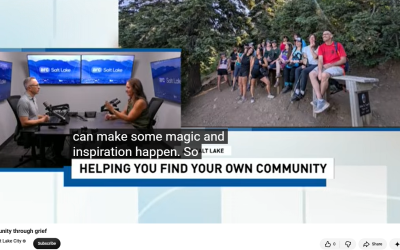
Watch: Molly: No One Should Grieve Alone
I share more of my story and the role grief, running and community have played in my life in my conversation with A New Shade of Me, released September 10, 2026.
Watch the full episode on YouTube
If you or someone you know is struggling: The 988 Suicide & Crisis Lifeline provides free and confidential support in the United States. Call or text 988, or visit 988lifeline.org to connect with a trained crisis counselor.