There’s something great about becoming a regular somewhere.
Not celebrity-level regular. Nobody needs to shout your name when you walk through the door (unless you like that sorta thing :)). Just regular enough that someone recognizes you. The barista remembers your order. Someone at run group asks how your trip went. You walk into trivia and there’s a wave from across the room because you’ve officially become one of the people who comes on Thursdays.
The technical term is third place, coined by sociologist Ray Oldenburg. Home is our first place, work is our second, and third places are the informal gathering spots where we spend time outside the two. Oldenburg wrote about neighborhood cafés, pubs, barber shops and other places where people gathered regularly enough to become part of one another’s everyday lives.
The modern version is a lot bigger. Coffee shops and neighborhood bars still count, but so can a running group, climbing gym, recreation league, volunteer organization, dog park, pottery studio, book club, trivia night or recurring community event.
TikTok creator Madison Rae has built her Can It Third Space? series around traveling the country and asking a wonderfully simple question of the places she visits: Can it third space? Her series has earned millions of views, suggesting plenty of us are interested in finding out.
The answer has less to do with if it’s the perfect coffee shop, and more about how interesting it gets when we come back.
Everybody Was New Once
Walking into an established group can be un-nerving.
People are already talking. Someone is waving at someone across the room. There’s an inside joke you definitely don’t understand. Three people are discussing something that apparently happened last Tuesday.
Remember… Every regular in the room had a first day. The person who seems to know everyone once knew nobody. The friends laughing at the other end of the table probably had a first conversation that neither of them remembers now.
How are they so friendly now? The kept coming back.
Third spaces aren’t some magical discovery. We don’t walk through the right door and immediately think, These are my people.
Most likely, the first time we show up, all we get to say is, That was fun.
Then we come back next week to see what happens.
Research on friendship gives us a pretty good reason to keep showing up. University of Kansas researcher Jeffrey Hall studied how much time people spend together as relationships develop. His research found that moving from acquaintance to casual friend generally takes around 40 to 60 hours together, with closer friendships requiring considerably more.
What? We don’t have to make a best friend by 8:30? Sweet. No pressure.
We enjoy ourselves, have a conversation, learn a name and go home.
Then we can come back.
Consistency Is Where It Gets Good
The first time, we may not know anyone.
The second time, maybe we recognize the girl in the corner and the guy on his laptop wearing a Jazz cap.
A few visits later, they recognize us too and we wave to each other in acknowledgement.
Eventually, we know enough about someone’s life to ask how their interview went. Someone remembers we were going out of town. We know who is ridiculously competitive at trivia and which volleyball player is going to dive for absolutely everything.
No single interaction turned those people into acquaintances or friends. The accumulation of interactions built something worth showing up for, friends.
Third spaces are great at giving relationships somewhere to blossom.
Rick Kyte, an ethics professor at Viterbo University who studies friendship, described it simply in an interview with Here & Now: “We see them over and over again.” He points to regular exposure and shared purpose as two things that help acquaintances become friends.
The run happens every Tuesday. Trivia comes around again next Thursday. The volunteer shift is every other Saturday. Why not go again and see what happens.
Madison Rae has arrived at a similar conclusion through actually visiting these spaces. When asked what she would tell someone looking for a third space, she emphasized that finding one often doesn’t happen on the first try. Her advice is refreshingly uncomplicated: “Once a week, please go out.”
Could that be the trick? Find somewhere you enjoy being, and give it enough time to become familiar.
The People We Sort of Know Are Pretty Great Too
We put a lot of emphasis on our closest relationships, and for good reason. But there is another entire category of people who can make everyday life more interesting: the people we sort of know.
Researchers call these relationships weak ties, which is a wildly uninspiring name for people who can be pretty delightful.
These are your trivia people. The guy from the gym. The woman whose pace matches yours at run group. The person at the coffee shop who always asks about your dog. The neighbor you talk to for ten minutes whenever you both happen to be outside.
Research by Gillian Sandstrom and Elizabeth Dunn found that interactions with people beyond our closest social circles can contribute to happiness and a greater sense of belonging.
Not everyone we meet needs to become a close friend. (Thank goodness)
There is value in simply having more people in the world we’re happy to see.
Sometimes the person we sort of know becomes someone we know really well. Third spaces give those relationships somewhere to go without asking us to decide immediately what they’re supposed to become.
This Can Be a Really Fun Part of Single Life
Our lives can contain a lot of different circles.
We have longtime friends, family, coworkers, neighbors, dating, gym friends, travel friends, running friends, other parents, people we volunteer with and the friend who will always say yes to dinner on a Thursday.
A third space may add another circle.
Maybe we meet someone we want to date. Great.
Maybe we meet someone who also wants to hike at 7 a.m. Saturday. Also great.
Maybe we find the person who will see the weird concert nobody else wants to attend, join our trivia team, try the new restaurant or text us because they found cheap flights somewhere interesting.
Maybe we simply end up knowing ten more people we genuinely enjoy talking to (or smiling and waving at across the room, no pressure).
Other people really do make life more interesting.
Your Third Space May Already Be Around the Corner
The conversation happening around third spaces right now has expanded the definition considerably, and I’m here for it.
TikTok creator Elizabeth Pfeiffer has been exploring Phoenix looking for her ideal third space, visiting places like the public library and evaluating what makes somewhere worth returning to. Her series is a reminder that these spaces don’t have to be trendy, expensive or designed specifically for socializing.
A library can work. So can a park.
A coffee shop can work. So can a climbing gym.
If you like running, find a recurring run group. If you’re into games, try a weekly trivia night or game club. If making things sounds better, look at pottery studios, art classes, and makerspaces. Volunteer somewhere consistently. Join a recreational league. Look at your library calendar. Find a community garden. Try a silent book club.
Start with something you would actually enjoy doing.
The important word is recurring.
A one-time experience can introduce us to people. A recurring experience gives us the chance to see them again.
And having an activity gives everybody something to do besides standing in a room thinking, Okay, I guess we’re supposed to socialize now.
We can run. Paint. Volunteer. Play volleyball. Read. Make something. Answer an unreasonable number of questions about 1990s television.
Conversation starts without the awkward effort.
The big question when trying a new space:
Would I come back?
If the answer is yes, come back.
Then One Day, You’re the Regular
At some point in this discovery, someone else walks in for the first time.
They stand near the edge for a minute. They’re looking around, trying to figure out where to go and who to talk to. Everyone else seems to know what they’re doing.
You know the look.
You were them at one point.
Except now you know where everyone puts their stuff. You know who’s in charge. You know a few people you can introduce them to. So you get to be the person to say hello and welcome them into this amazing third space.
Maybe you explain how things work. You move over and make room at the table. You introduce them to someone else.
And all of a sudden you’re no longer simply benefiting from the third space. You’re helping create it.
The organizer can plan the event. The business owner can provide the room. The coach can run the league. But the people who keep showing up create the culture.
Eater recently asked hospitality leaders what makes a third space work. Sarah Lewitinn, co-owner of Jacaranda, offered advice that applies well beyond restaurants and bars: “Find ways to introduce people to each other.”
That’s how a collection of people starts becoming something more.
Someone welcomes us. We keep coming back. Eventually, we’re the one doing the welcoming.
Sometimes the Space Moves
Oldenburg’s original third places were usually tied to neighborhoods. The pub was down the street. The café was around the corner. People returned partly because these places were woven into everyday life.
Our lives are more spread out now.
We commute. We work remotely. Friends live 40 minutes away. We build communities around interests as much as neighborhoods. So the modern third space doesn’t always have a permanent address.
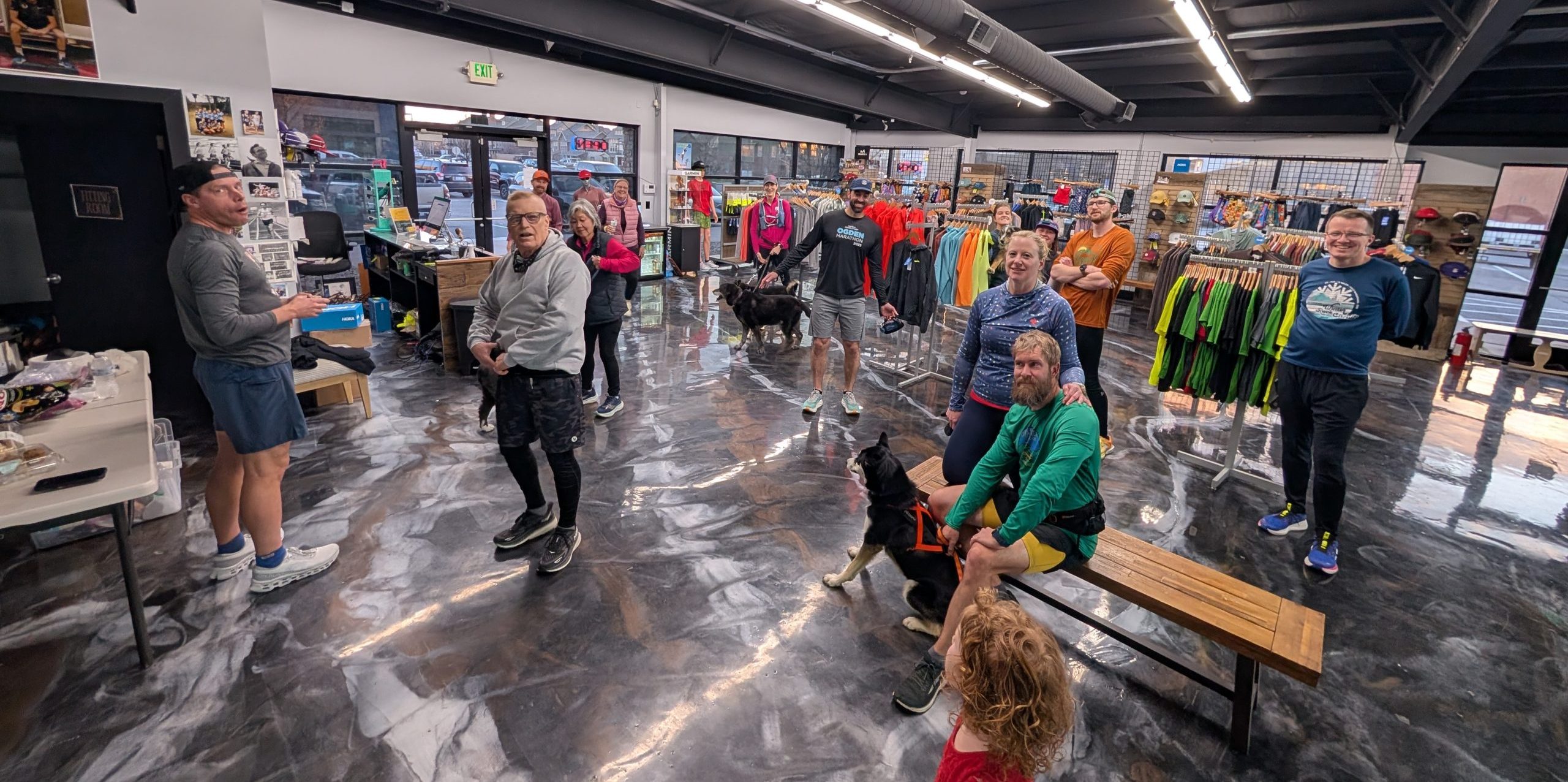
A Tuesday run group can meet at different trailheads and still be the same social space. A recreational league can change gyms. A group can gather for completely different activities throughout the month while familiar faces keep appearing.
That’s part of what we’re creating with Have You Met? Events.
One week we might be playing volleyball. Another we’re walking a trail, going to a basketball game, making something, exploring somewhere new, or eventually bringing a few thousand single adults together in Las Vegas for three days.
The activity gives us something worth showing up for. Coming back gives us the opportunity to recognize each other.
We’re creating more places to participate in the lives we’re already living, and the people who keep showing up become part of what makes those spaces worth returning to.
Find Somewhere Worth Coming Back To
Maybe you already have a third space and simply never had a name for it.
Maybe it’s your Tuesday night group, your gym, your neighborhood coffee shop or somewhere you’ve been going for so long that you’ve stopped noticing how many people you know there.
Or maybe this whole third-space conversation has you curious?
Look around. Find something you’d enjoy doing more than once. Go because the activity sounds fun. Talk to somebody if you feel like it. Learn a name. Then come back.
That’s where the magic happens and real connections are made.
Eventually, someone recognizes us. An unfamiliar face becomes familiar. An acquaintance may become a friend. We start becoming one of the people who knows how things work.
And then someone new walks in.
We know exactly how that feels.
So we look up.
We smile.
We make a little room.
And just like that, we’re not only finding third spaces anymore.
We’re helping create them.