

There is a very specific moment that happens before you attend an event alone.
You’ve registered. You were interested enough to put it on your calendar. Maybe you even spent part of the day looking forward to it. Then, as the event gets closer, the questions start.
Who am I going to talk to? What if everyone else already knows each other? Am I going to walk in and just stand there awkwardly? Will people assume something about me because I came alone?
And suddenly, staying home sounds pretty good.
If you’ve ever wanted to go to a singles event but stopped yourself because you didn’t have someone to go with, you are in very good company. When we recently asked our Have You Met? Events community what keeps them from attending, one of the most common answers was simple: they were nervous to go alone or didn’t know anyone who would be there.
That hesitation makes sense. Walking into almost any unfamiliar social situation alone requires a little courage. Add the word singles to the event description, and the stakes can feel even higher.
But what does actually happen when you go to a singles event alone?
Usually, far less awkwardness, and far more normal human interaction, than you imagined on the drive there.
The Hardest Part May Be Walking Through the Door
Anticipation has a way of turning an ordinary social event into a much bigger event in our heads.
Before you arrive, you can imagine all kinds of uncomfortable scenarios. You picture walking into a room where everyone already has a group. You wonder whether you’ll know where to stand or who to approach. Maybe you worry that attending alone makes it obvious that you’re really single, as though everyone else somehow arrived under different circumstances.
Then you walk through the door and discover something reassuring: other people came alone too.
Even the people who look completely comfortable may have spent ten minutes sitting in their car before coming inside. Some are naturally outgoing. Some are nervous. Some know one person. Others know absolutely nobody. Almost everyone, however, has something important in common: they showed up because they were open to meeting people.
That alone makes a singles event different from trying to strike up a conversation with a stranger at the grocery store or wondering whether someone at the gym wants to be approached.
You already know why everyone is there.
So, What Happens When You Arrive?
This varies by event, but a good singles event shouldn’t leave you standing at the entrance wondering what to do next.
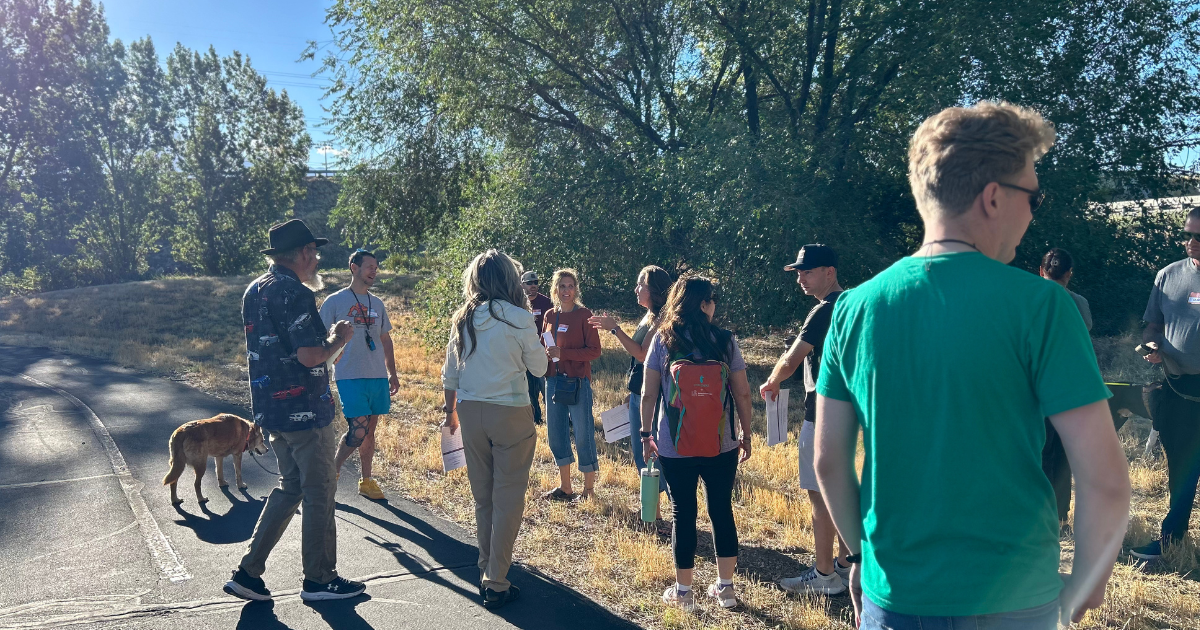
At Have You Met? Events, we intentionally build activities into our events because we’ve learned that connection is easier when people have something to do together. Sometimes that means walking or hiking. Other times it might be volleyball, pickleball, painting, comedy, bingo, golf, or another shared experience.
The activity isn’t really the point. It gives connection somewhere to begin.
Think about the difference between walking up to a stranger and saying, “So…tell me about yourself,” versus walking next to someone on a trail and talking about the view, laughing over a game, or sitting together waiting for a comedy show to begin.
One feels like an interview.
The other feels like life.
Shared activities take some of the pressure off introductions because conversation no longer has to carry the entire interaction. You have something happening around you that gives you natural reasons to talk, react, laugh, move around, and meet someone else.
And if one conversation doesn’t click? You’re not trapped in it. The event keeps moving.
What Should You Do in the First Five Minutes?
Don’t make your first goal “meet someone.”
That’s far too much pressure to put on five minutes.
Your first job is simply to arrive and get situated. Check in. Put your things down. Get a drink if there is one. Look around. Give yourself a minute to adjust to the room rather than expecting yourself to become the most charismatic person there immediately.
Then make the goal smaller.
Talk to one person.
It can be as simple as, “Have you been to one of these before?” or “Did you come by yourself too?” Those questions work because they’re genuine, and there’s a good chance the person standing next to you has wondered exactly the same thing.
If that feels uncomfortable, find the host or one of the event organizers and tell them it’s your first event. We want to know. A good host would much rather introduce you to a few people than discover later that you spent the evening feeling unsure where to begin.
You do not have to work the room.
You only have to start somewhere.
You Don’t Need to Be an Extrovert to Enjoy a Singles Event
There’s a persistent idea that social events are designed for naturally outgoing people—the person who can walk into a room of 50 strangers and somehow leave knowing everyone’s name.
That person may have a wonderful time. But you don’t have to become that person to belong there.
If you’re quieter, choose experiences that give you built-in interaction without requiring constant conversation. A hike gives you opportunities to talk while moving. A comedy night gives everyone something to experience together without expecting you to make conversation for two straight hours. Games and sports naturally create smaller groups and repeated interactions.
This is also why choosing the right first event matters.
If walking into a large mixer sounds terrifying, don’t make that your first experiment. Pick something that already feels familiar or enjoyable to you.
Love being outside? Start with a walk or hike.
Like sports? Try volleyball or pickleball.
Prefer something where you can sit back for part of the evening? A comedy show or entertainment-based event might be easier.
You don’t get extra points for choosing the event that scares you most.
Choose the one that makes you think, I’d probably enjoy doing that anyway.
What If You Don’t Meet Someone You Want to Date?
This may be the most important expectation to change before attending any singles event.
You might meet someone you want to date. We certainly hope people make those connections.
But if the only definition of a successful singles event is “I met my future partner,” almost every social experience is carrying an unreasonable burden.
What if you meet someone who becomes a friend?
What if that friend invites you hiking next month, and you meet six more people?
What if you discover an activity you want to do again? What if you make a professional connection, find a travel buddy, join a running group, get invited to something new, or simply have a genuinely good Saturday instead of spending another evening scrolling?
Connection is bigger than dating.
A full single life needs friendship, community, adventure, laughter, movement, belonging, and people who will answer the group text. Romance can be a wonderful addition to that life, but it doesn’t have to be the only reason to leave the house.
You can go to a singles event, not meet your person, and still leave with more life than you arrived with.
What If Everyone Already Knows Each Other?
Some people will.
That’s what happens when a community starts working.
People meet at one event, recognize each other at the next, become friends, and come back. We actually want that to happen. A room where nobody ever forms a friendship wouldn’t be much of a community.
But existing friendships don’t mean the group is closed.
The best thing you can do when you notice people who seem to know each other is resist the instinct to interpret familiarity as exclusion. Instead, introduce yourself. Ask how they met. You may discover that they met at one of these events only a month ago—and one of them was the person standing alone the first time.
There’s another advantage to returning more than once: you become one of the familiar faces.
The first event is unfamiliar. At the second, you may recognize three people. By the third, someone may be relieved to see you when they walk in alone.
That’s how community gets built.
Going Alone Can Actually Be an Advantage
Bringing a friend can make an unfamiliar event easier, and there’s nothing wrong with that. But there’s an unexpected advantage to arriving solo.
You’re more available.
When we attend something with a close friend, it’s easy to spend most of the evening talking to the person we already know. We have a safe place to retreat whenever there’s a lull.
When you come alone, you have more reason to introduce yourself, join another group, change seats, find a partner, or say yes when someone asks you to participate.
It may feel more vulnerable at first, but it can also make you more open to the exact thing you came for: meeting people you didn’t know before.
The Goal Isn’t to Stop Feeling Nervous
You may still be nervous when you arrive.
That doesn’t mean you shouldn’t go.
Confidence isn’t always something we acquire before doing something uncomfortable. Sometimes it’s the thing we get afterward, when we realize the experience we had built up in our minds was manageable after all.
Maybe the first five minutes feel awkward. Then you start talking to someone. Twenty minutes later, you’re laughing. An hour later, you realize you haven’t thought about the fact that you came alone since you walked through the door.
That’s a much more realistic goal than waiting until attending alone feels completely comfortable.
Come Solo. Pick One Event and Try It.
You don’t need to commit to becoming a social butterfly. You don’t need to promise yourself you’ll attend every singles event on the calendar. And you definitely don’t need to walk through the door expecting to meet the love of your life.
Pick one thing you would genuinely enjoy doing.
Register.
Show up.
Give yourself enough time to get past the first few uncomfortable minutes before deciding whether it was worth coming.
Maybe you meet someone you want to date. Maybe you meet a new friend. Maybe you simply prove to yourself that you don’t need to wait for someone else to start doing the things you want to do.
And the next time you see an event that sounds fun, the question may stop being, Who can I convince to come with me?
It might simply become:
Do I want to go?
If the answer is yes, go anyway.