
We spend money on the parts of our lives we want to take care of. We pay for gym memberships because we want to be stronger. We register for races because having something on the calendar gives us a reason to train. We take classes, join clubs, buy concert tickets, book vacations and spend money on hobbies because those experiences add something to our lives.
Why do our social lives seem a little different? There is an assumption that meeting people should happen naturally, and ideally for free. Friends are supposed to appear through work or neighbors or mutual friends. Dates can happen at the grocery store, coffee shop or gym. We certainly don’t need to buy a ticket to talk to another human being.
All of that is true. People meet people everywhere.
Paying for a singles event isn’t really paying to meet someone. It is paying to participate in an experience that creates another opportunity for people to be in the same place, doing something together. A registration fee is less like a transaction for a particular outcome and more like something most of us already do in other areas of our lives: investing our time, energy and money in something we want more of.
Our social lives deserve that same kind of intention.
Relationships Are Part of the Life We’re Building
Most of us don’t need a research study to tell us that relationships matter, but it can be pretty convincing. In a Pew Research Center survey, 61% of U.S. adults said having close friends was extremely or very important to living a fulfilling life. Interestingly, that was considerably higher than the percentage who said the same about being married, having children or having a lot of money.
The Harvard Study of Adult Development has spent decades examining an even larger question: what helps people live good lives? Robert Waldinger, the study’s director and a professor of psychiatry at Harvard Medical School, has described one of its most consistent findings this way: “Positive relationships keep us happier, healthier, and help us live longer.”
Waldinger talks about relationships in terms of social fitness, an idea that makes intuitive sense when you think about it. We understand that physical fitness requires some attention. We don’t exercise once, eat a vegetable and assume we’re set for the next 20 years. We continue to invest in our health because we want it to remain part of our lives.
Relationships need attention too. Waldinger has warned that “perfectly good friendships and relationships can wither away from neglect.” Not because anything dramatic happened, but because life got busy. Someone moved. Work took over. Kids had activities. We meant to call. Six months passed.
This is where the idea of investing in a social life becomes more interesting. Money is only one part of that investment. Time matters. Effort matters. Being the person who reaches out matters. Going somewhere when staying home would be easier matters.
And sometimes there is a registration fee.
What Are We Actually Paying For?
A $25 game night doesn’t come with a $25 friend. Registering for volleyball doesn’t guarantee a date. No event organizer can promise that the person you hoped to meet will be standing across the room when you arrive.
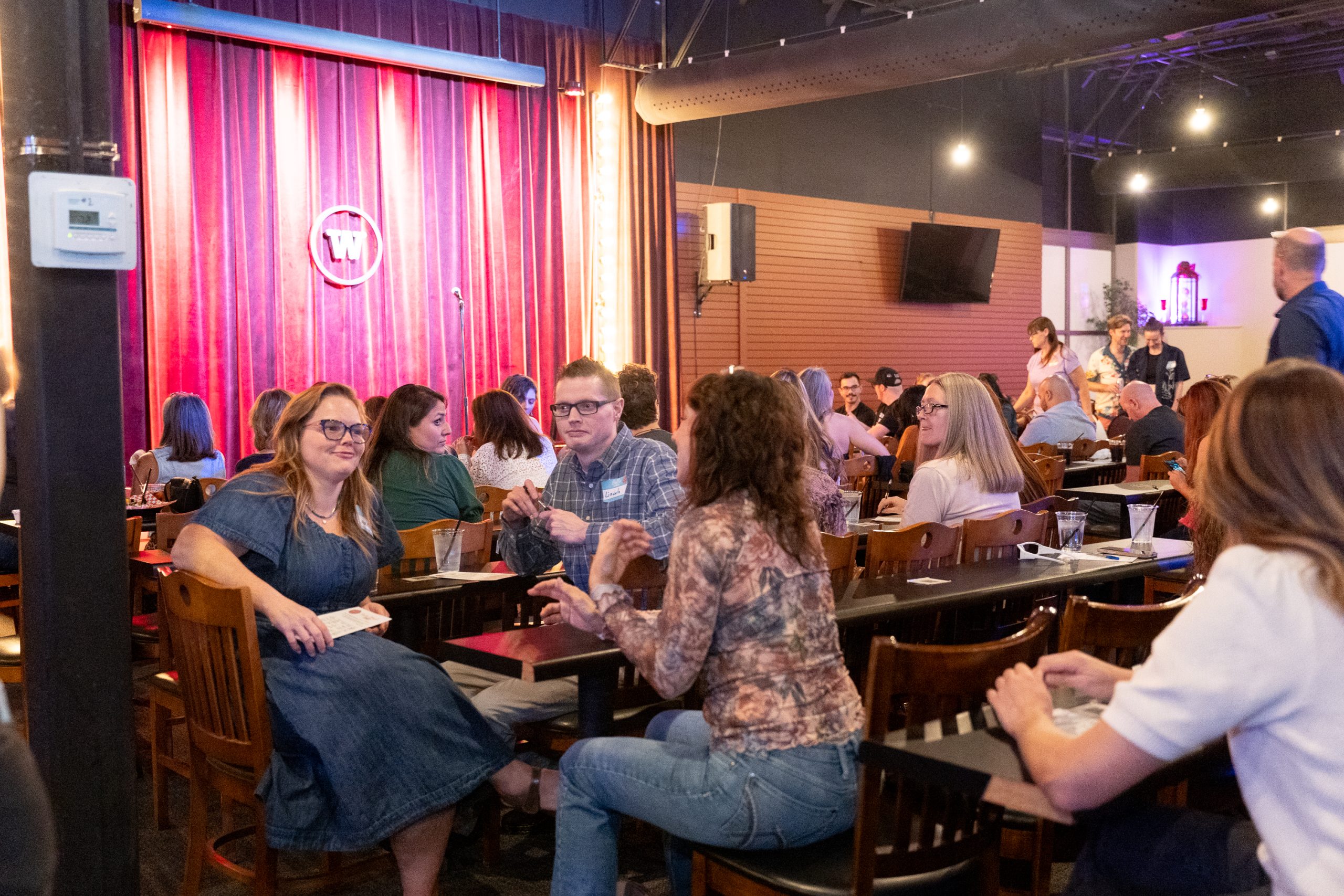
What the registration fee can provide is the experience itself: a place to go, people to meet, an activity to participate in and a structure that makes interacting with other people a little easier. Depending on the event, it may also cover a venue, food, entertainment, equipment, staff and all of the decidedly unglamorous logistics required to get a group of adults into the same place at the same time.
We pay for access to experiences like this all the time. A cooking class doesn’t guarantee we’ll become a chef. A race registration doesn’t guarantee a personal record. A concert ticket doesn’t guarantee it will become our favorite concert ever. We decide that participating in the experience has value before we know exactly how the night will turn out.
There is quite a bit of consumer research supporting the value of spending money on experiences. Amit Kumar of the University of Texas at Austin, Thomas Mann of Harvard University and Thomas Gilovich of Cornell University have studied the relationship between experiential spending and social connection. Across a series of studies, they found that experiential purchases can foster greater feelings of connection than material purchases and can increase people’s desire to participate in social activities.
Kumar has summarized the research much more simply: “Experiences connect us with others.”
That doesn’t mean every experience is worth paying for. It does suggest that spending money to go do something with other people isn’t frivolous. The experience itself can have value.
Everyone Else Bought a Ticket Too
There is another part of paying for a singles event that we don’t talk about very often. Everyone else bought a ticket too.
That doesn’t tell us exactly who they are. It doesn’t tell us whether we’ll be attracted to them, have anything in common or want the same things. But it does tell us something about the decision they made before they walked through the door.
They decided this part of their life was worth investing in.
They found an event, registered, put it on their calendar and spent money to be there. In a world where it’s incredibly easy to say we’d like to meet more people while continuing to do exactly what we’ve always done, they took an actual step toward creating the opportunity.
There is something appealing about meeting people at that point in their lives.
Maybe they’re ready to date. Maybe they’re looking for friendship or a bigger community. Maybe they’ve spent the last few years rebuilding after a divorce, raising kids, growing a career, caring for family or simply figuring out what they want this next part of life to look like. We can’t know someone’s story from a registration fee, and spending money certainly isn’t a measure of someone’s worth, but what we do know is that they were willing to put some of their resources behind participating in this part of their life rather than simply waiting for something to happen.
If you’re standing in the same room, that says something about you too.
You invested the money, but you also invested the time. You chose to leave the house, walk into a room full of people you probably don’t know and see what happens. You decided that meeting people, trying something new or expanding your social life was worth making space for.
There is also a small but meaningful commitment that comes with registering for something. An idea becomes a plan. Maybe I’ll go becomes I’ll be there Thursday at seven. The ticket on your calendar gives you one more reason to follow through on the decision you made when you registered.
What makes that room interesting isn’t simply that everyone paid to enter. It’s the shared intention behind being there.
Everyone has made some version of the same decision: I’m willing to invest in this part of my life.
That’s a pretty cool thing to have in common before anyone even says hello.
A Social Life Doesn’t Have to Happen by Accident
In a conversation with Mel Robbins, dating coach Matthew Hussey suggested thinking about a love life as a “portfolio of investments.” Dating apps might be one part of the portfolio, but he also talked about joining communities and deliberately putting ourselves in places where other people are. His example was wonderfully practical: “If you run, why aren’t you in a running club?”
The same idea applies whether we’re actively dating or simply trying to create a fuller social life.
If running is something you already enjoy, a running club gives you the chance to do it around other people. If you like games, a game night does the same thing. Classes, volunteer organizations, recreational leagues, neighborhood events, book clubs, hiking groups and singles events all create opportunities to cross paths with people we might not otherwise meet.
None of this requires being unhappy with the life we already have. Wanting another friend doesn’t diminish the friends we already love. Being comfortable spending a Saturday night alone doesn’t mean we can’t decide volleyball sounds more fun this week. Enjoying dating apps doesn’t prevent us from also wanting to meet someone while we’re out living our lives.
Investing in a social life isn’t necessarily about fixing something that’s missing. It can simply be about creating more opportunities for something good to happen.
What Counts as a Good Return?
Singles events come with an unusual expectation that most other social experiences don’t.
Imagine paying $30 for a cooking class. You spend two hours learning something, laugh with the people at your table, eat good food, have a few interesting conversations and go home. Most of us would consider that a perfectly successful evening.
Now imagine that the exact same cooking class is advertised specifically for singles. You learn something, laugh, eat good food, have a few interesting conversations and go home. But there wasn’t anyone there you wanted to date.
Suddenly, it can feel as though the event didn’t work.
That’s a remarkably narrow way to calculate the return on a social experience.
Dating can absolutely be part of why someone attends a singles event. Sometimes two people meet and something develops. That’s great. But romantic chemistry isn’t the only form of connection that has value.
Psychotherapist and relationship expert Esther Perel has written that “friendship is a love story,” describing friends as people who provide “community and continuity in an ever-changing world.” Friendship can be particularly important during periods when the other structures of our lives are changing. Relationships end. Children grow up. Careers change. People move. The friendships and communities around us can become an important source of continuity through all of it.
So perhaps a successful singles event doesn’t need to end with a phone number.
Maybe you meet someone you eventually date. Maybe you meet the person who invites you hiking the following weekend. Maybe you find three people who are also looking for a trivia team. Maybe someone you meet introduces you to someone else six months from now. Maybe you discover that you really like pickleball despite years of making fun of pickleball.
Or maybe you spend a couple of hours laughing with people you didn’t know when you arrived and go home having had a really good night.
That still counts.
Investing Doesn’t Mean Spending Recklessly
There is an important distinction between valuing experiences and assuming every experience is worth whatever it costs. Budgets are real, and people have very different amounts of discretionary income available to them.
Research into experiential spending has actually found some nuance here. The often-repeated finding that experiences make people happier than material purchases isn’t equally strong under every financial circumstance. When resources are limited, the way people evaluate those purchases can change. That matters because “just spend money on experiences” isn’t particularly useful advice if the spending itself creates financial stress.
Investing in your social life is much broader than buying tickets.
A walk with a friend can be free. A community class might cost $10. A recreational sports league might be $75 for a season. A concert might be $150. A weekend trip might become something you save for months in advance.
The point isn’t the amount. It’s deciding that your social life belongs somewhere in the way you allocate your resources.
Most of us already have categories, formal or otherwise, for the things that matter to us. Travel. Fitness. Restaurants. Hobbies. Entertainment. Our dogs, who somehow appear to have acquired their own discretionary spending accounts.
There can be room for people, too.
Friendship Needs Somewhere to Happen
One of the more interesting findings from the American Friendship Project is that dissatisfaction with friendship isn’t always about the number of friends people have. More than three-quarters of respondents reported being satisfied with the number of friends in their lives, yet more than 40% said they weren’t as close to those friends as they would like to be.
That suggests the issue isn’t always finding more people. Sometimes it’s having more opportunities to spend time together.
Friendships need somewhere to happen. So do new relationships. We need places where we can run into one another, do things together and gradually move from strangers to familiar faces.
Sometimes that’s a neighborhood. Sometimes it’s work or church. Sometimes it’s a volleyball court, hiking trail, coffee shop, cooking class, game table or community event. Sometimes it’s a very large hotel in Las Vegas filled with a few thousand single adults.
The location isn’t the relationship, of course. Neither is the activity. They’re simply places where relationships have an opportunity to begin.
That is part of what we’re paying for when we register for an experience.
The Value Is in Participating
There is a larger body of research showing that experiential purchases often become more closely tied to our identities, relationships and memories than material purchases. We tend to tell stories about things we’ve done. The trip where everything went wrong becomes funny five years later. We remember the concert where we lost our voice, the race we trained for, the dinner that lasted four hours and the thing our friends convinced us to try even though we were certain we’d hate it.
People are usually somewhere in those stories.
This doesn’t mean we need to fill every evening with plans or turn our social lives into another area of self-improvement. A quiet night at home can be exactly what we want. There is nothing inherently virtuous about being busy.
But when we do want more people, more experiences or more opportunities in our lives, we can participate in creating them.
We can make the invitation instead of waiting for one. We can join something. We can become a regular somewhere. We can put an experience on the calendar and actually go. We can spend some of our discretionary money on doing things around other humans.
And yes, sometimes we can buy the ticket to the singles event.
Not because a ticket guarantees that we’ll meet our person. It doesn’t. We’re buying the opportunity to be there, alongside other people who made the same decision.
What happens once we walk through the door is still wonderfully unpredictable. A conversation could turn into a friendship. A friendship could lead somewhere else. We might discover a new place, a new hobby or a group of people we want to see again. We might simply have a story to tell the next morning.
That’s the nature of experiences. We don’t get to know the outcome before we decide whether to participate.
If relationships are one of the things that make a good life good, putting some of our time, effort and money toward creating opportunities for them seems like a pretty reasonable investment.
Our social lives are part of our lives. They deserve a place in the budget.
Ready to put something on the calendar?
We’re getting together for games, walks, dinners, adventures and plenty of other reasons to get out and meet some people. Pick something that sounds fun and come with us.
Button: SEE WHAT’S COMING UP